Introduction
In February 2026, the Supreme Court ruled that IEEPA does not authorize the president to impose tariffs — a decision that set in motion what may be the largest tariff repayment process in U.S. history. According to Skadden, over 330,000 importers paid duties across more than 53 million entries, with approximately $166 billion in IEEPA duties collected.
If your company paid IEEPA duties on imported goods, you may be owed a significant refund — but collecting it requires action. This guide walks through how CBP's CAPE system works, what documentation you need, and why filing timing directly affects your place in the repayment queue.
Refunds don't arrive automatically. Here's what the process actually requires — and what happens if you miss the window.
Key Takeaways
- Refunds are not automatic — importers must file a CAPE Declaration through CBP's ACE Portal
- Only the Importer of Record (or their licensed customs broker) can file
- Valid refunds are expected within 60–90 days of Declaration acceptance, paid via ACH
- The government has appealed the universal refund order; file now to secure your place in CBP's queue
- Refunds apply to IEEPA duties only — Section 301, Section 232, and other tariffs are excluded
What Is the IEEPA Tariff Refund Process?
The IEEPA tariff refund process is the formal mechanism through which U.S. importers recover duties paid under tariffs the Supreme Court determined exceeded the president's statutory authority under the International Emergency Economic Powers Act.
The legal foundation: the Supreme Court decided Learning Resources, Inc. v. Trump (No. 24-1287) and Trump v. V.O.S. Selections, Inc. (No. 25-250) on February 20, 2026, holding that IEEPA does not authorize the president to impose tariffs. The U.S. Court of International Trade subsequently issued refund orders — including a March 4, 2026 order covering all importers, not only the original plaintiffs.
What the Refund Covers
A valid refund includes:
- 100% of IEEPA duties paid on eligible entries
- Interest, calculated from the date of duty deposit to the date of liquidation or reliquidation, under 19 U.S.C. § 1505
What This Process Is Not
This is not a standard drawback claim, a Section 301 exclusion, or a routine duty refund request. CBP built an entirely new system — the Consolidated Administration and Processing of Entries (CAPE) system — inside its existing ACE platform specifically for this situation.
CAPE processes refunds in consolidated lump sums rather than entry-by-entry, which is a meaningful operational difference for importers with large entry volumes.
IEEPA duties only — refunds do not extend to:
- Section 301 China tariffs
- Section 232 steel and aluminum duties
- Any other non-IEEPA tariff authority
Importers must verify which legal authority applied to their specific entries before assuming eligibility.
Who Qualifies for a Refund?
The Importer of Record Requirement
Eligibility runs to the Importer of Record (IOR) — the business legally named on CBP entry summaries as responsible for the imported goods. CBP's official guidance is explicit: only the IOR, or the licensed customs broker who filed the entries on behalf of the IOR, may submit a CAPE Declaration.
Attorneys, freight forwarders, and third-party consultants outside the ACE system cannot file on your behalf.
Phase 1 Entry Requirements
During Phase 1, CBP accepts CAPE Declarations for:
- Unliquidated entries — where CBP has not yet issued a final duty determination
- Entries liquidated within the preceding 80 days — still within the processable window
- Entries with suspended, extended, or under-review liquidation status — accepted but held until the status resolves
Phase 1 does not process entries that are fully and finally liquidated beyond that window. Those fall under Phase 2, which has no announced processing timeline from CBP as of mid-2026.
Who Is Explicitly Excluded
Individual consumers who paid higher retail prices because importers passed tariff costs through are not eligible for direct refunds through CAPE. The legal remedy runs to the IOR, not to end customers or retailers who absorbed the cost downstream.
That gap has triggered consumer lawsuits. Reed Smith reported in April 2026 that roughly two dozen class actions had been filed against companies including Costco, FedEx, and Lululemon, alleging unjust enrichment and violations of state consumer protection statutes.
Some retailers — including Walmart — have stated they plan to pass savings to shoppers, but no legal requirement to do so exists.
How the CAPE Refund Process Works Step by Step
Step 1: Verify ACE Portal Access and ACH Enrollment
Before any filing can occur, the IOR or their customs broker must have:
- An active ACE Secure Data Portal account
- U.S. bank account information enrolled for ACH payment
CBP will not issue a refund (regardless of how valid the claim is) if ACH information is missing. This setup step is routinely overlooked and is one of the most common causes of refund delays.
Step 2: Identify All Eligible Entry Summaries
The CAPE Declaration can include multiple eligible entries regardless of whether they share the same liquidation date. Each CAPE Declaration accommodates up to 9,999 entries, and importers can submit multiple Declarations if needed.
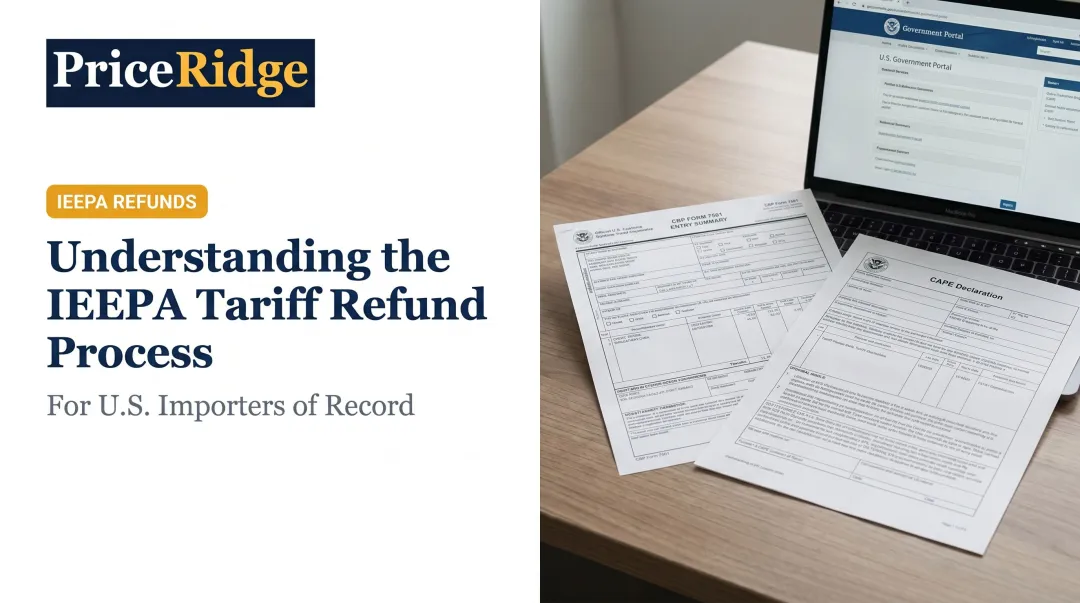
The foundational document for each entry is the CF7501 Entry Summary, which records the entry number, port code, IOR number, HTS subheading, country of origin, entered value, and duty amount. If your original broker is unresponsive or records are inaccessible, they can be retrieved through CBP's ACE Secure Data Portal Importer Query module using a CBP Power of Attorney.
Step 3: Prepare and Submit the CAPE Declaration
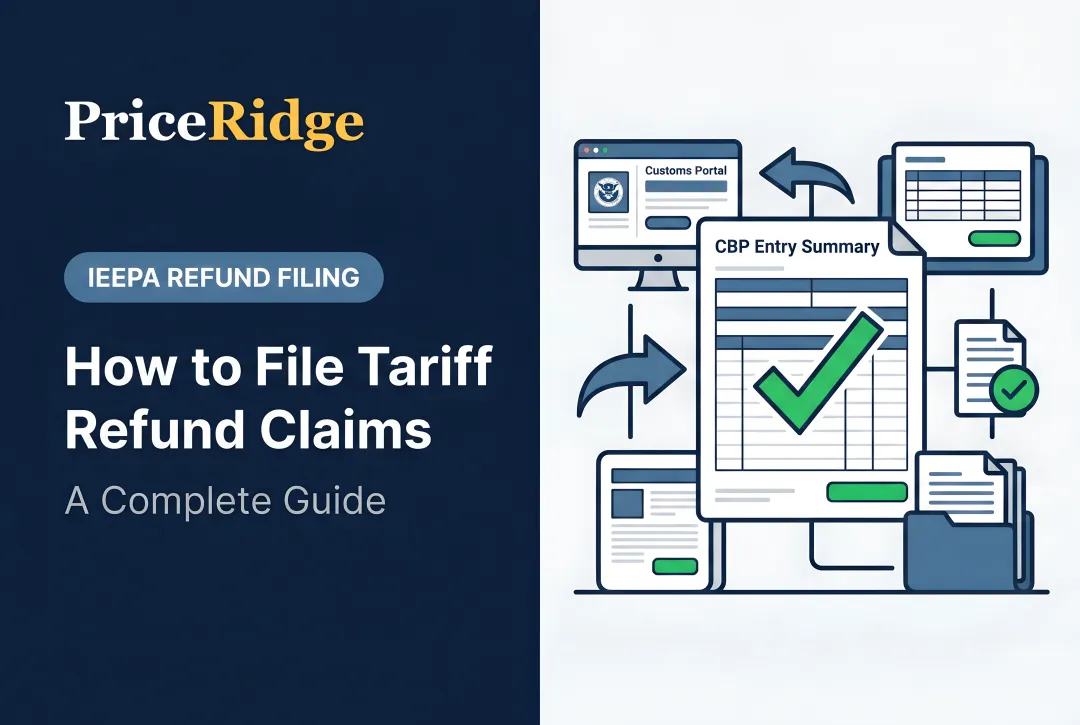
The CAPE Declaration is submitted through the CAPE tab in the ACE Secure Data Portal as a formatted .csv file listing all eligible entry numbers. CBP's CAPE Declarations and Error Definitions guidance details the exact schema.
Key rules for this step:
- CBP validates each entry on submission. Valid entries receive a CAPE claim number; rejected entries are flagged with reasons and can be resubmitted on a new Declaration
- Once accepted, a Declaration cannot be amended — omitted entries must go on a separate, subsequent filing
- Common rejection causes: wrong column order, incorrect date formats, missing IOR numbers, mismatched HTS codes, incorrect entry status classification (Phase 1 vs. Phase 2)
The Automated Broker Interface (ABI) is not used for CAPE Declarations ; filing goes through the ACE Portal only.
With over 26,000 importers already registered as of late March 2026, formatting errors are costly — they delay a claim in a processing queue that isn't getting shorter. Price Ridge validates every CSV against CBP's CAPE schema before submission and can file within days of receiving documentation.
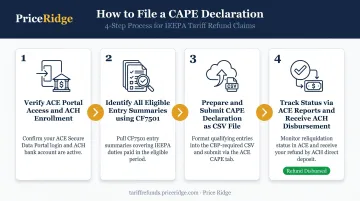
Step 4: Track Status and Receive Disbursement
CBP will not send email updates on CAPE claims. Importers must monitor status through ACE Reports (specifically REV-603, REV-613, REV-615, and ES-022 ) or work with their customs broker or filing service to track progress.
Timeline for valid claims:
- 60–90 days from Declaration acceptance for refund disbursement
- 3–5 weeks from the date of liquidation or reliquidation for ACH deposit to appear
- Interest is included in the refund payment
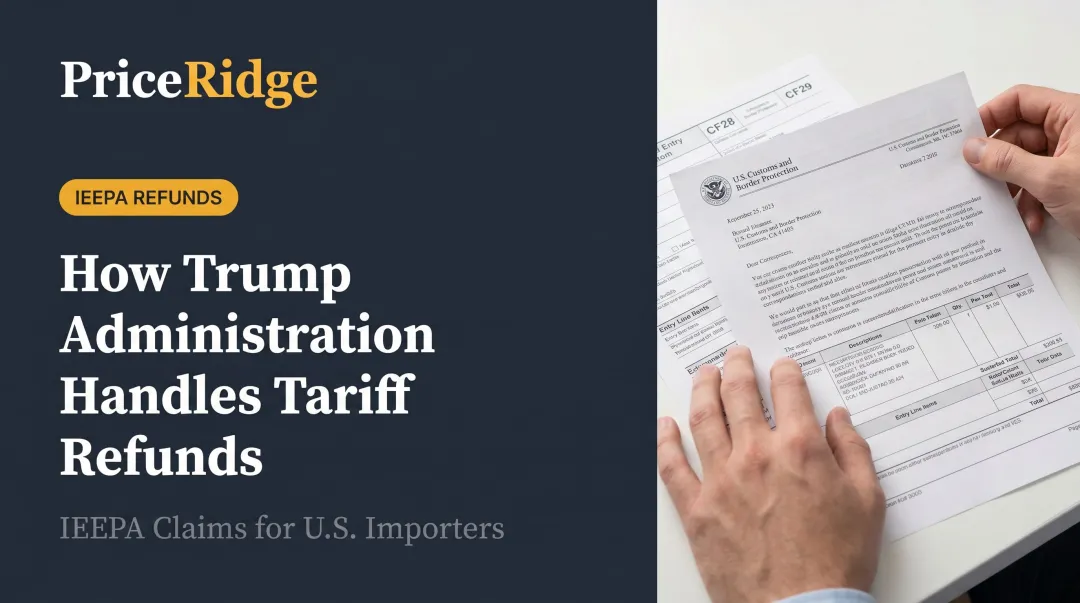
CBP can also issue CF28 (Request for Information) or CF29 (Notice of Action) on individual entries during processing. Missed or incomplete responses result in those entries being dropped from the refund , a permanent reduction in total recovery.
Key Factors That Affect Your Refund Timeline and Amount
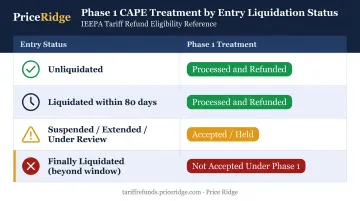
Liquidation Status
| Entry Status | Phase 1 Treatment |
|---|---|
| Unliquidated | Processed and refunded |
| Liquidated within 80 days | Processed and refunded |
| Suspended / extended / under review | Accepted, held until resolved |
| Finally liquidated (beyond window) | Not accepted under Phase 1 |
Finally liquidated entries require a Phase 2 filing strategy. Many importers have both Phase 1 and Phase 2 entries simultaneously — filing both in a single consolidated CAPE Declaration is possible and advisable for securing queue position before Phase 2 opens officially.
That filing urgency isn't just procedural — a live federal appeal is actively narrowing the window.
The Appeal Risk
On June 2–3, 2026, the DOJ filed notices of appeal challenging the CIT's April 17, 2026 universal injunction, escalating to the U.S. Court of Appeals for the Federal Circuit. The government argues the CIT lacked authority to order refunds for non-plaintiff importers — particularly for finally liquidated entries.
If the appeal succeeds, importers who haven't filed may face a narrowed eligibility window that requires individual litigation to recover anything. CBP continues processing Phase 1 refunds while the appeal works through the Federal Circuit, a process expected to take months.
Filing now locks in your queue position before that outcome is known. Waiting exposes your claim to a legal outcome you can't control.
Common Misconceptions and Fraud Risks
Misconception: Refunds Are Automatic
Many importers assume CBP will proactively issue refunds. CBP won't. An affirmative CAPE Declaration filing is required, and eligibility alone triggers nothing.
Misconception: IEEPA and Other Tariff Types Are Interchangeable
This process covers IEEPA duties only. These tariff types fall outside the Learning Resources v. Trump ruling entirely:
- Section 301 China tariffs
- Section 232 steel and aluminum duties
- Section 201 safeguard tariffs
- Antidumping and countervailing duties
Each is governed by a separate legal framework with its own process. Verify the tariff authority on your entries before assuming they qualify.
Fraud Warning
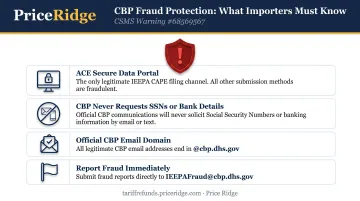
Beyond understanding what qualifies, importers need to know who to trust. CBP issued an official warning (CSMS #68569567, May 7, 2026) about scammers using email and social media to solicit financial information from importers under the guise of the CAPE process.
Key facts from CBP's warning:
- The ACE Secure Data Portal is the only legitimate channel for filing
- CBP will not request Social Security numbers, bank account details, or passwords by email or text
- Official CBP emails end in @cbp.dhs.gov
- Report suspicious activity to IEEPAFraud@cbp.dhs.gov
Only the IOR or the licensed customs broker who filed the original entries can submit a CAPE Declaration. Any third party claiming they can file on your behalf outside the ACE Portal should be treated as a red flag.
Frequently Asked Questions
How do I get a Trump tariff refund?
File a CAPE Declaration through CBP's ACE Secure Data Portal, listing all eligible entry summaries subject to IEEPA duties as a formatted CSV file. You must also have U.S. bank account information enrolled in your ACE account before filing, since ACH is the only payment method CBP uses for these disbursements.
Who will receive Trump tariff refunds?
Only Importers of Record — or licensed customs brokers filing on their behalf — are eligible to receive IEEPA tariff refunds through the CAPE system. Individual consumers, freight forwarders, and downstream buyers do not qualify for direct refunds.
Does Trump have to refund all the tariff money?
A federal court ordered universal refunds following the Supreme Court's ruling, but the Trump administration appealed that order to the Federal Circuit in June 2026. If the appeal succeeds, importers who did not individually sue the government may lose access to the CAPE process and face a more difficult recovery path.
How long does it take to receive a tariff refund?
CBP expects to issue valid IEEPA duty refunds within 60–90 days of a CAPE Declaration being accepted, with the ACH deposit appearing 3–5 weeks from the date of liquidation or reliquidation. Compliance reviews can extend this timeline.
Will consumers get refunds from the IEEPA tariffs?
Consumers are not eligible for direct refunds through the CAPE process. The legal remedy applies exclusively to Importers of Record. Some retailers have indicated they may pass savings to customers through lower prices, but no legal requirement to do so exists.
What happens if my entries are already fully liquidated?
"Finally liquidated" entries — a CBP term for entries past the standard protest period — fall outside Phase 1's processing window under current CAPE rules. These Phase 2 entries remain legally eligible for refund under the court ruling, but CBP has not announced a processing timeline. Filing a CAPE Declaration now secures your place in the queue before Phase 2 officially opens.
Price Ridge specializes in IEEPA tariff refund claim filing for U.S. Importers of Record, handling the entire CAPE Declaration process on a contingency basis with no upfront cost. For a free eligibility review, contact refunds@priceridge.com.