Introduction
In February 2026, the Supreme Court ruled that tariffs imposed under the International Emergency Economic Powers Act were never legal. That decision opened a major tariff refund opportunity — one most small businesses haven't recognized yet.
Here's the problem: most small importers have no idea they qualify. Many don't have a customs broker on retainer or a trade attorney they can call. The refund process runs through CBP's ACE portal, a system built for licensed brokers, not small business owners juggling shipping, payroll, and everything else.
This guide breaks down who's eligible, exactly how to file, the mistakes that trip up small importers, and how to get expert help without paying anything upfront.
Key Takeaways
- IEEPA tariffs were ruled unconstitutional; CBP now processes refunds through a new CAPE portal inside ACE
- Eligibility depends on your entry's liquidation status; complex cases arrive in later phases
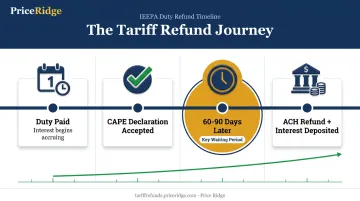
- Refunds include interest and land via ACH 60-90 days after an accepted CAPE Declaration
- You can file yourself, use a broker, or work with a service like Price Ridge for $0 upfront
- CBP never charges a fee for this process, and anyone requesting payment is running a scam
What Happened: The IEEPA Tariff Ruling and Refund Opportunity Explained
The Supreme Court's ruling in Learning Resources, Inc. v. Trump and Trump v. V.O.S. Selections, Inc. settled a question trade lawyers had been arguing for over a year: does IEEPA give the President authority to impose tariffs? The Court said no.
IEEPA lets the government "regulate" imports, but the law never mentions tariffs or duties. That power belongs to Congress.
That ruling created a legal obligation. CBP had collected duties under tariffs that, according to the nation's highest court, should never have existed. Refunds followed.
CBP Built a New System Just for This
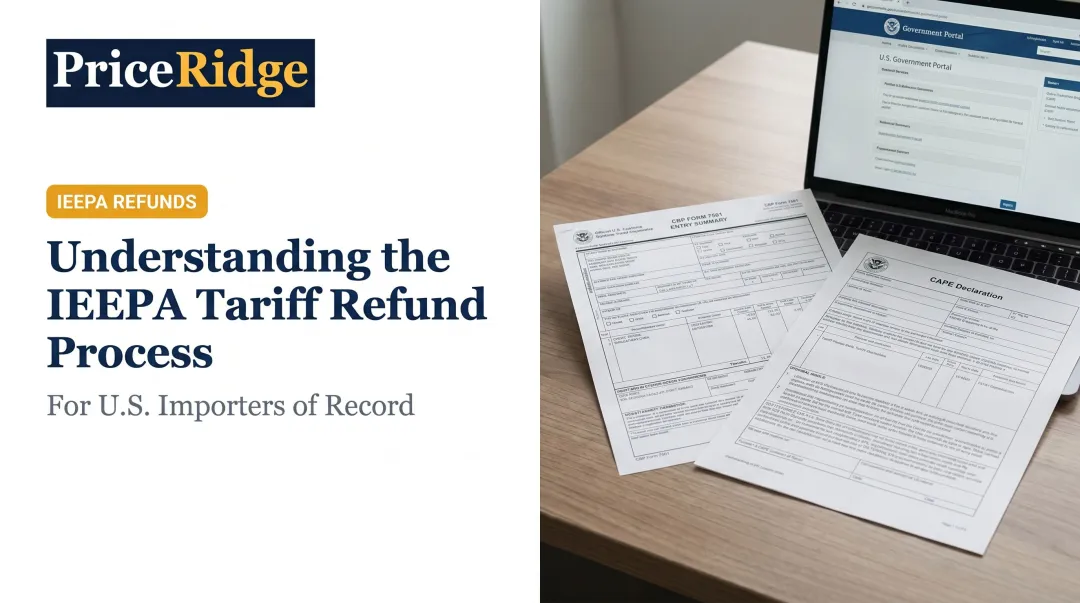
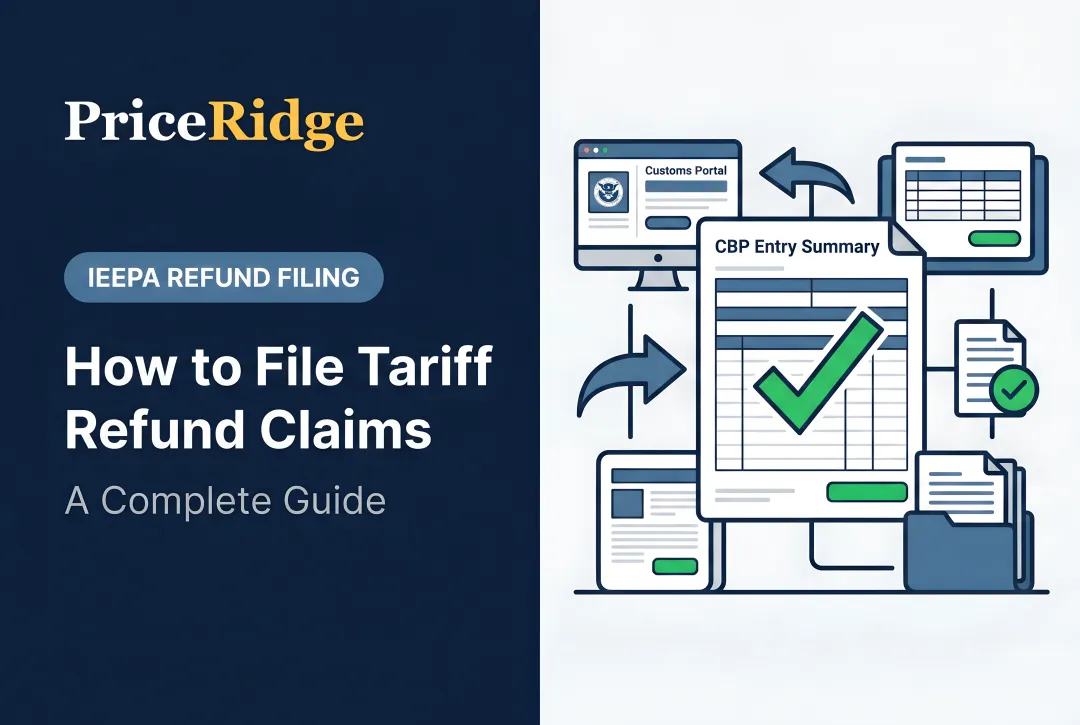
Rather than process refunds one entry at a time, CBP created CAPE, the Consolidated Administration and Processing of Entries system, inside its existing ACE portal. CAPE launched Phase 1 in April 2026 and lets importers submit thousands of entries in a single declaration instead of filing separate claims for every shipment.
The scale here is real. A Congressional Research Service report pegged estimated duty deposits under the invalidated tariffs at roughly $129 billion as of December 2025. That's a historical benchmark, not a final refund total, but it shows the size of what's moving through the system.
A few details matter for your bottom line:
- Interest is included. Refunds accrue statutory interest from the date you paid the duty through the date of liquidation.
- CAPE isn't a protest. Traditional protests and drawback claims move entry by entry and can take months. CAPE batches entries together for speed, but demands precise, error-free data upfront.
- Timing is real but not instant. CBP's own guidance points to 60-90 days from acceptance, not from the day you upload your file.
Is Your Small Business Eligible for a Tariff Refund?
Short answer: if you're the Importer of Record and you paid duties specifically because of the invalidated IEEPA tariffs, you likely qualify. This does not cover Section 301 China tariffs or Section 232 steel and aluminum duties. Those are separate legal frameworks, untouched by this ruling.
Phase 1 Eligible Entry Types
CBP's current rollout covers:
- Unliquidated entries — still open in CBP's system
- Entries liquidated within roughly the last 80 days, giving CBP room to reliquidate before the 90-day statutory window closes
- Suspended, extended, or under-review entries, though these keep their existing status until liquidation happens
If your entries don't fit those categories yet, don't assume you're out of luck. Older liquidated entries, reconciliation entries, and cases tied to open drawback claims are expected in later CAPE phases. CBP is building this in stages, not shutting doors permanently. Knowing which bucket applies to your entries determines how soon you can expect movement, which leads directly to the next requirement.
The Prerequisite Most Small Businesses Miss
You need an active ACE Portal account with current ACH refund banking information enrolled. No portal account, no ACH details, no refund, period. This trips up more small importers than any other step, because most never set up their own ACE access. Their broker always handled it.
Quick self-check: If you imported goods hit by the invalidated tariffs and you can locate entry summaries or proof of duty payment, you almost certainly qualify. Once you clear that bar, the real challenge shifts to filing the claim correctly.
How to Apply for Your Tariff Refund: The CAPE Filing Process Step-by-Step
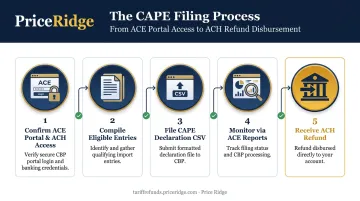
Filing runs through five stages. Skip a step, and your refund stalls.
- Confirm ACE Portal access and ACH enrollment. Verify your account is active and your banking details are current. This is the prerequisite everything else depends on.
- Compile your eligible entries. Gather entry summaries and proof of payment for every shipment that falls under Phase 1 criteria. Multiple ports or multiple shipments means more digging.
- File the CAPE Declaration. Upload a CSV file listing your entry numbers through the CAPE tab in ACE. Only the Importer of Record or the broker who filed the original entries can submit this. Attorneys cannot file it for you.
- Monitor status through ACE Reports. CBP does not send email updates. You'll need to check reports like ES-022 to track your declaration. CBP flags rejected entries individually, and you must resubmit them on a fresh declaration.
- Receive your refund via ACH, generally 60-90 days after acceptance, interest included, unless a compliance review adds time.
One caution that catches people off guard: once CBP accepts a CAPE Declaration, you cannot amend it. Miss an entry, and it needs an entirely new declaration. Double-check your entry list before hitting submit.
Given the broker-only submission rule and the no-amendment risk, many importers skip the DIY route. Contingency-based services like Price Ridge coordinate with licensed broker partners to manage CAPE filing end-to-end, with no fee unless CBP disburses a refund.
Common Roadblocks Small Businesses Face When Filing
Small importers run into the same handful of obstacles again and again.
- No existing broker relationship. Many small businesses never touch ACE directly, so filing alone means facing a steep learning curve.
- Scattered documentation. Payment proof and entry summaries scattered across shipments, ports, and brokers take real time to gather without an ACE Importer Query account.
- Multi-line entries hiding refundable duties. IEEPA duty amounts can sit buried inside consolidated shipments, so a broker's headline total may miss money you're owed.
Watch for one more thing: CBP has stated plainly that it charges no fees to process these refunds. Any email, call, or portal request asking for payment or banking details outside the official ACE system is fraud. Report it, don't respond to it.
How Price Ridge Helps Small Businesses Recover Their Tariff Refunds
Price Ridge was built for small business importers who know they overpaid in tariffs but don't have an in-house customs team to figure out the next step.
It starts with a free, no-obligation eligibility review. Submit your import details (origin countries, industry, estimated tariffs paid, whether you have a broker) and Price Ridge responds within one business day. There's no minimum claim size for this review, and no cost either way.
Price Ridge then manages the entire CAPE process end-to-end. That includes:
- Coordinating with partner licensed customs brokers to retrieve your CF7501 entry summaries and duty records, even without an existing broker relationship
- Preparing and validating the CAPE Declaration CSV against CBP's exact schema
- Filing through the ACE portal and monitoring status, since CBP won't email you updates
- Responding to any CBP inquiries (CF28s or CF29s) that could otherwise strip individual entries out of your refund
This runs on a $0 upfront, contingency-based model. Price Ridge takes a percentage (typically 15-30%, depending on claim size and complexity) only after CBP actually pays.
For businesses that need cash now instead of waiting 60-90 days, Price Ridge offers claim financing. For claims of $500,000 or more, there's also an outright purchase option at 75-85 cents on the dollar. You get paid immediately; Price Ridge takes on the wait.
Frequently Asked Questions
Can my business get a tariff refund?
If you're the Importer of Record and paid duties under the now-invalidated IEEPA tariffs, you're generally eligible. Exact eligibility also depends on your entries' liquidation status under CBP's phased CAPE rollout.
Are companies actually getting tariff refunds?
Yes. CBP's CAPE portal has been actively processing and disbursing refunds, including interest, on a rolling basis since Phase 1 launched in April 2026.
How long does it take to receive a tariff refund after filing?
Typically 60-90 days from when CBP accepts your CAPE Declaration, not from your upload date. A compliance review can extend that window.
Do I need a customs broker to file for a tariff refund?
Only the Importer of Record or the broker who filed the original entries can submit a CAPE Declaration. Services like Price Ridge coordinate with partner brokers on your behalf so you don't need an existing broker relationship.
What if my business doesn't have an ACE Portal account set up yet?
You'll need to establish ACE Portal access and enroll your ACH refund banking information before CBP can issue any payment. This setup step is the most common bottleneck for small importers.
Are there any fees to file for a tariff refund?
No. CBP charges nothing to process these refunds. Any request for payment, banking details, or fees claiming to come from CBP is a scam and should be reported immediately.